
Sucking is a natural, innate behavior in newborns and infants. When introducing a new pacifier, some babies may accept it immediately, while others may need several opportunities to become familiar with it.
However, acceptance varies between infants, and there is no scientifically established number of attempts or specific period required for a baby to get used to a new pacifier.
For this reason, It is generally best to introduce the new pacifier gradually and without forcing it.
Sucking is an innate, natural reflex that gives your child a safe and calming feeling. Pacifiers are often used in stressful situations, as a sleep aid or to relieve the pain of teething. However, pacifiers often lead to misaligned teeth.
We have therefore developed the orthodontic dentistar pacifier in close cooperation with dentists according to the latest scientific findings. Compared to conventional pacifiers, the dentistar pacifier with its unique Dental-Step reduces the risk of misaligned teeth.
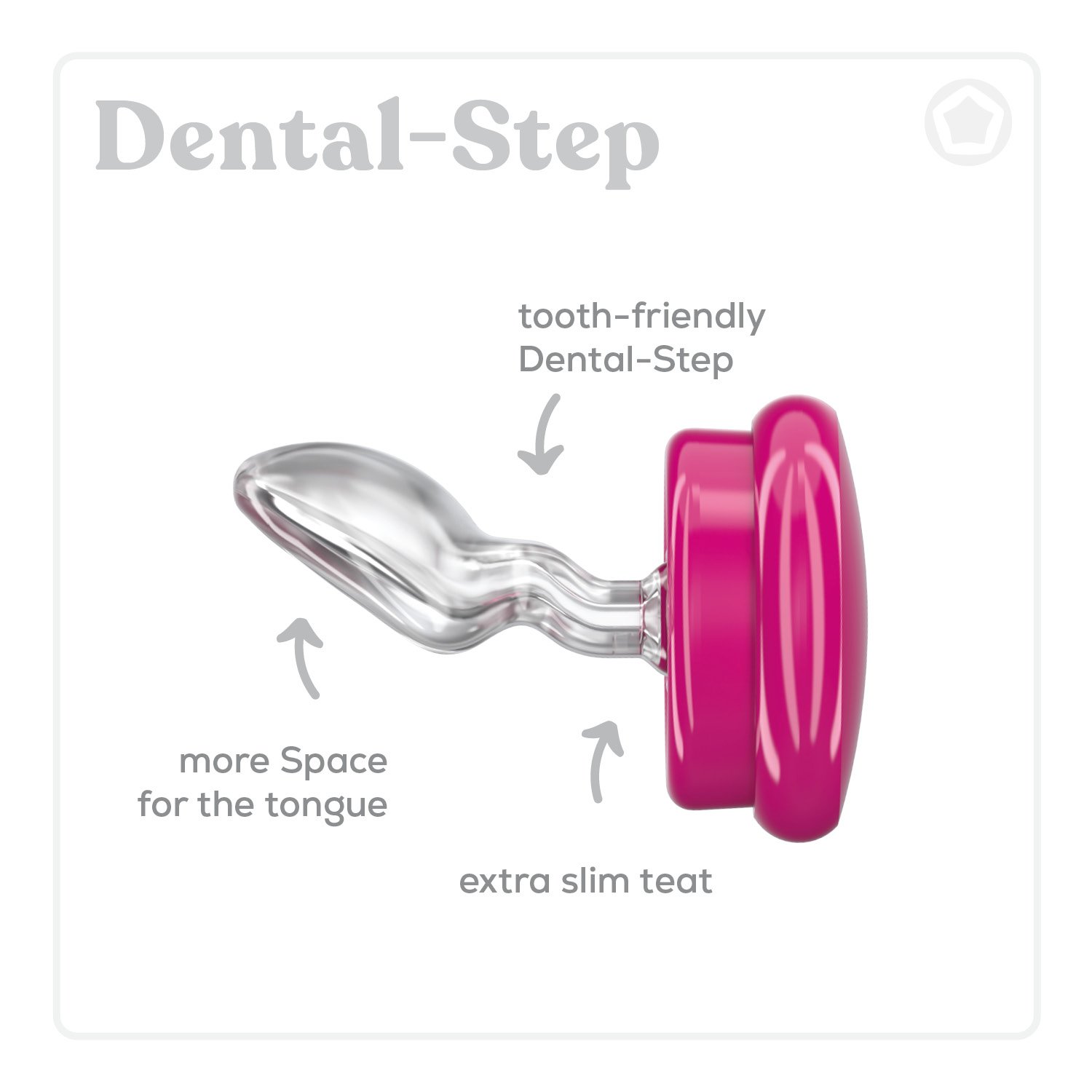
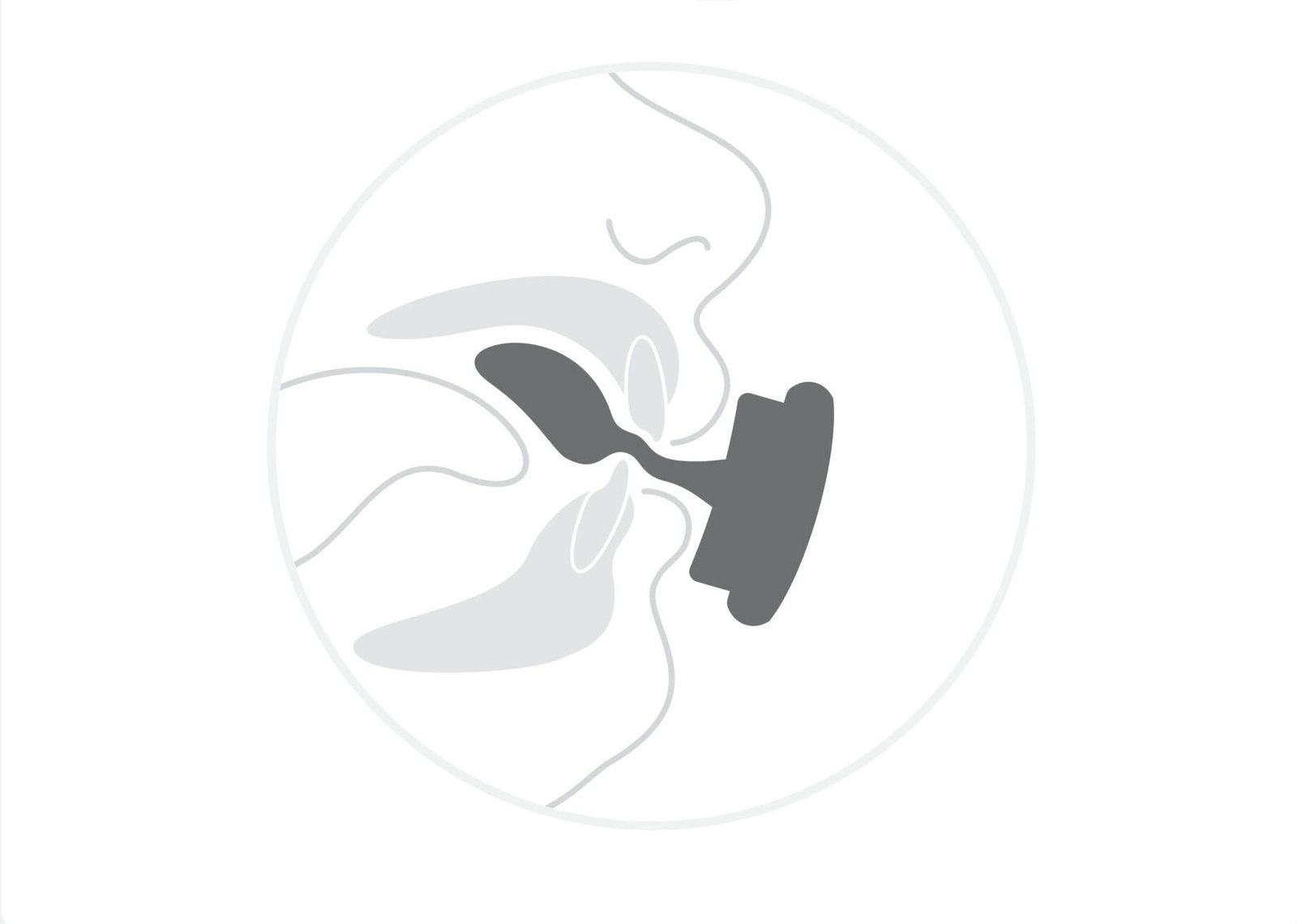
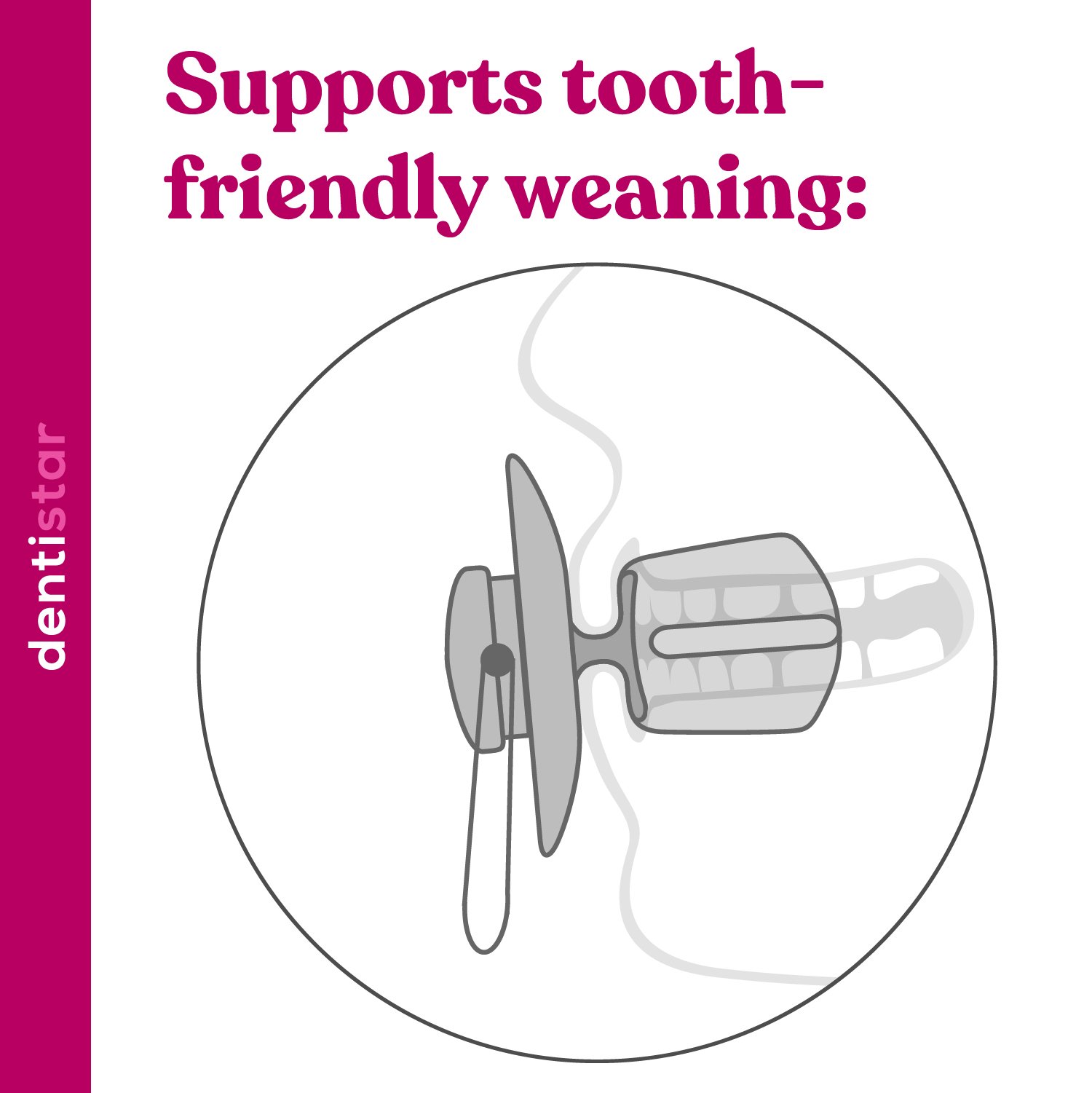
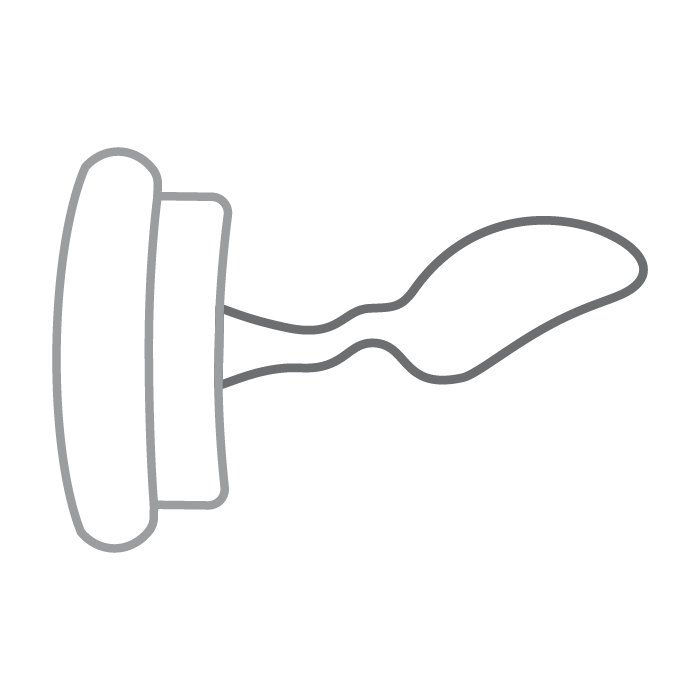
The Dental-Step traces the gums and teeth so that the teeth can remain in their optimal and straight position. The extra flat shaft minimizes the distance between the upper and lower incisors, which prevents an open bite.
As a general rule, a soother should be replaced every one to two months – even if it appears to be in perfect condition. If cracks or other damage appear earlier, it must be replaced immediately.
As babies usually have a high need to suck, soothers and thumb sucking can help them to calm down and self-regulate. Nevertheless, the soother should be preferred to thumb sucking.
The thumb is larger and harder than a soother, which can lead to misaligned teeth and jaw deformities. The thumb is also much more difficult to wean off, as it is always available.
In the first few months of life (up to the end of the 3rd month), your baby’s immune system is not yet fully developed. Therefore, particular attention must be paid to hygiene. If the soother is dropped on the floor or otherwise soiled, it must be boiled before being used again. For babies older than three months, it is sufficient to clean the soother with hot water and mild detergent and boil it once a day.
1. Clean the pacifier in a pot
Boiling is a classic and proven method of disinfecting soothers.
- Step 1: Fill a pot with enough water.
- Step 2: Bring the water to a boil.
- Step 3: Place the pacifier in the boiling water for about 5 minutes. Make sure that it is completely covered with water.
- Step 4: Remove the pacifier from the water using clean tongs or a spoon and leave it to air dry on a clean cloth.
2. Sterilize pacifiers in the microwave
A quick and uncomplicated alternative is to use a sterilization box for the microwave. This method saves time and is particularly practical for everyday use.
Step 4: Let the sterilization box cool down after the process and open it carefully to avoid burns from hot steam.
Step 1: Place the soother in the sterilization box and add a small amount of water according to the manufacturer’s instructions.
Step 2: Close the box securely.
Step 3: Place the box in the microwave and heat for 2 to 5 minutes at 600 to 800 watts, depending on the instructions.
International studies show that the risk of Sudden Infant Death Syndrome (SIDS) can be significantly reduced by using a pacifier. The reasons for this have not yet been conclusively researched. According to a recent study, oxygen saturation increases with the use of a soother, which could be one reason for the reduced risk. It is therefore recommended to give the pacifier at bedtime (including during the day) until the 1st birthday.
The risk of SIDS is highest up to the 1st birthday.
Some aspects have also proven to be effective against SIDS: Ensure the correct sleeping position and environment – place your baby in a supine position to sleep, place your baby in a suitable sleeping bag, do not cover your baby with a comforter, make sure the room temperature is correct and do not dress your baby too warmly. Your baby should grow up in a smoke-free environment before and after birth. If possible, your baby should be fully breastfed for 6 months.
You can find more information here: https://safetosleep.nichd.nih.gov/reduce-risk/reduce
As a general rule, a soother should be replaced every one to two months – even if it appears to be in perfect condition. If cracks or other damage appear earlier, it must be replaced immediately.
From the age of two, we recommend gradually weaning your child off the soother. This allows the jaw and teeth to continue to develop healthily. Here too, every child is completely individual. Some find it easy to part with their faithful companion, others are very attached to it. If your child doesn’t want to give up the soother so easily, a little support and patience will help.
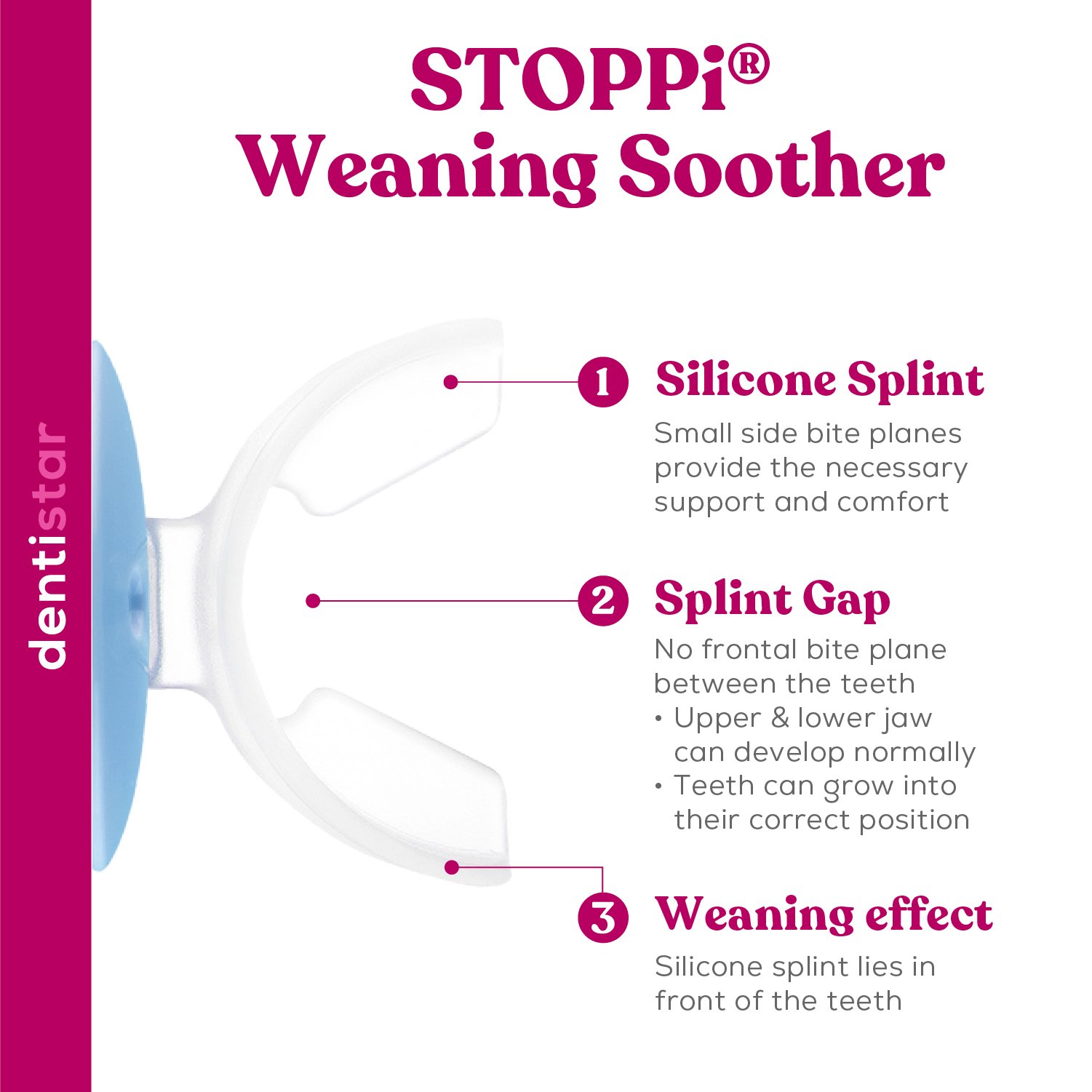
dentistar STOPPi®
The dentistar STOPPi® is a practical helper for the transition to the soother-free period.

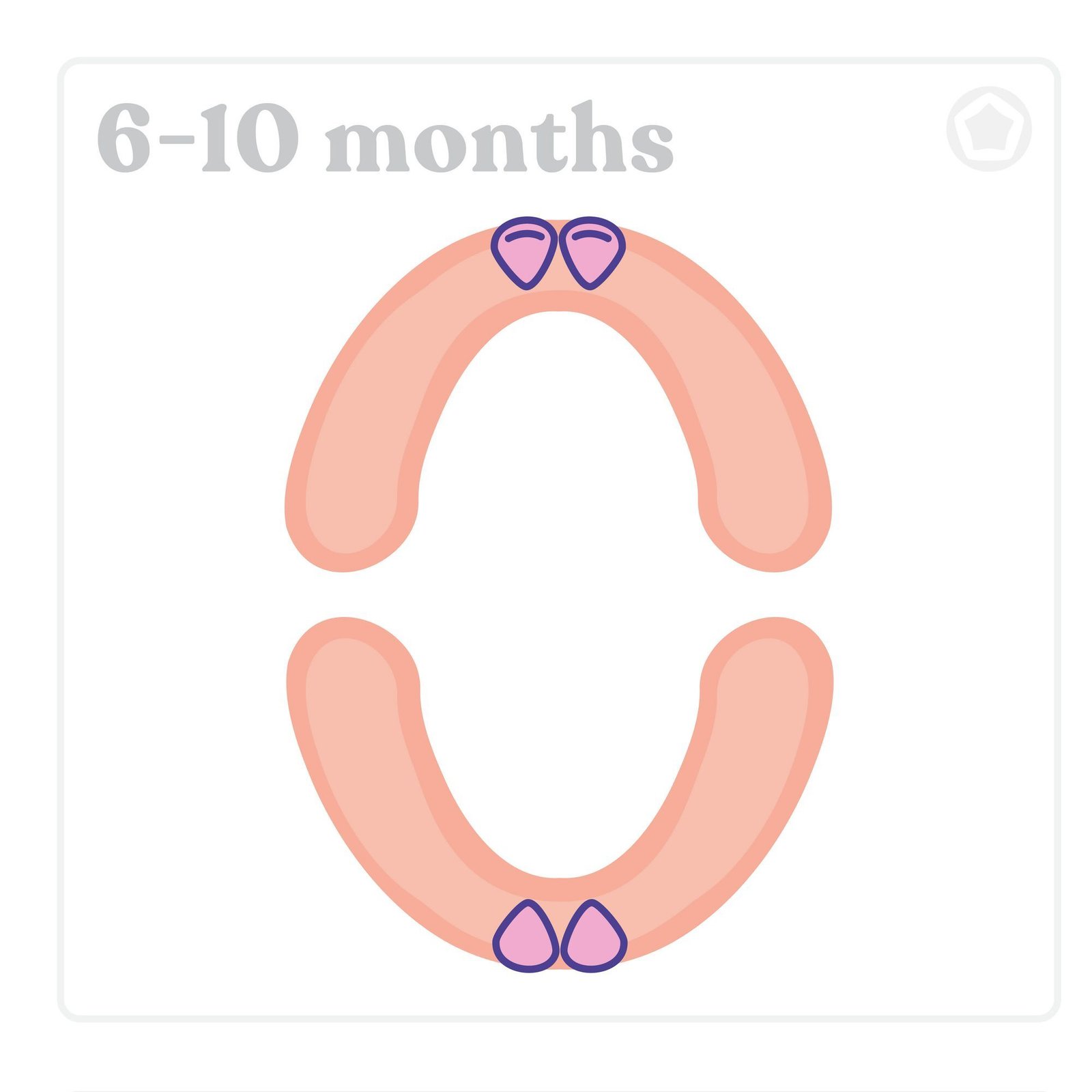
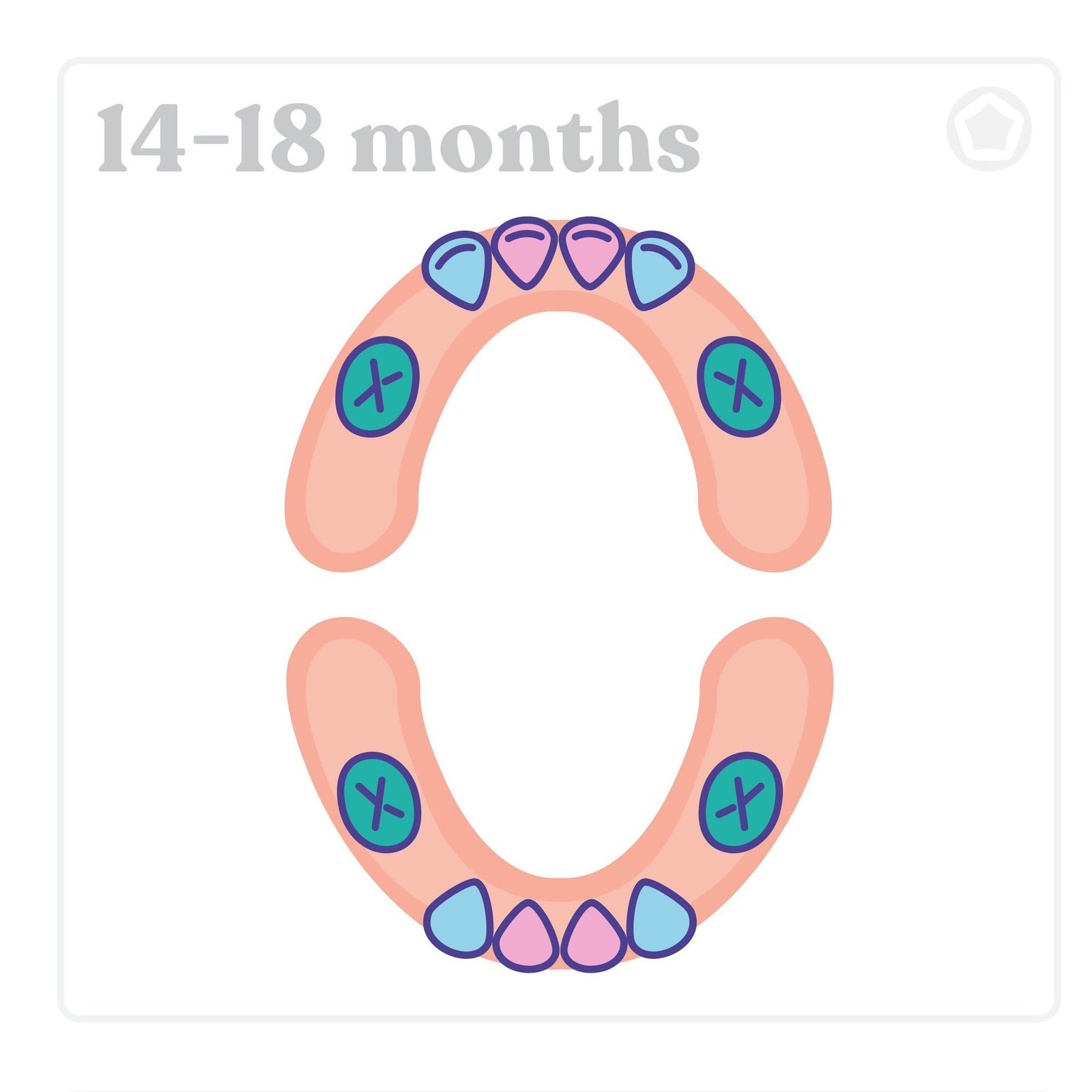
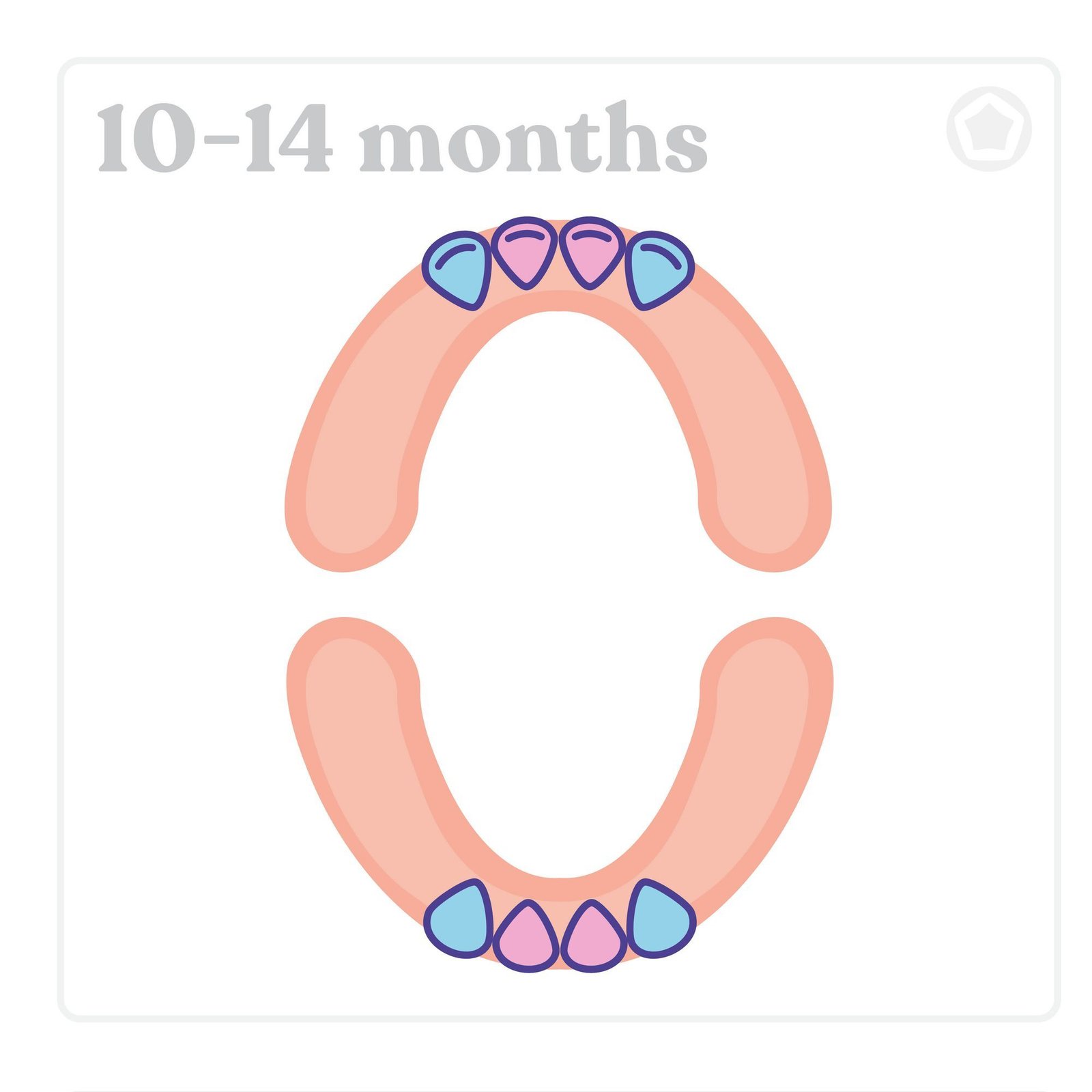
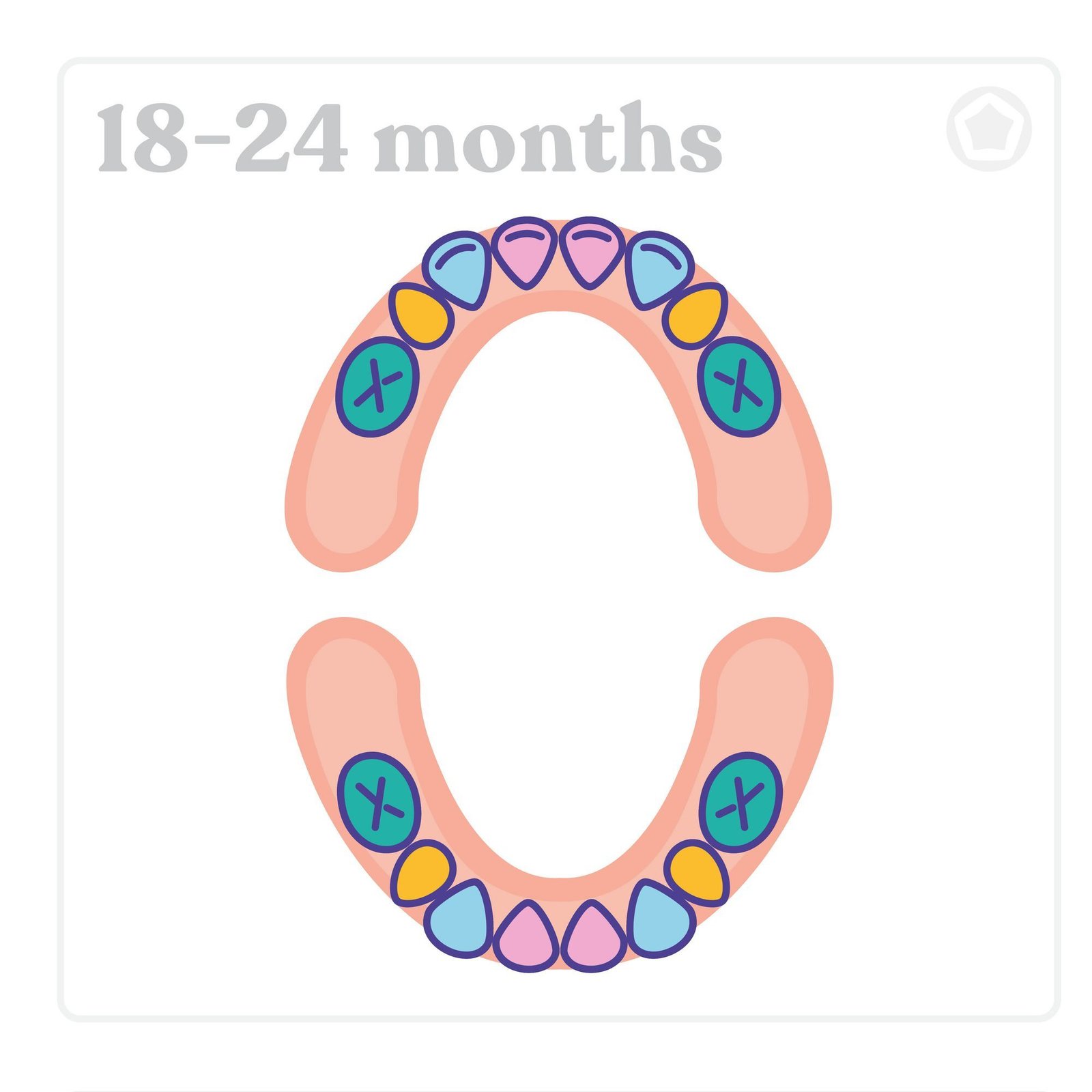
The first tooth usually appears from the 6th month, sometimes earlier or later. The following eruption times are guidelines. However, they may vary from baby to baby.
- 6-8 months: lower incisors
- 8-10 months: upper incisors
- 10-14 months: lateral incisors
- 14-18 months: 1st molar
- 18-24 months: canines
- 24-30 months: 2nd molar
The teat is the part of the soother that the baby sucks on. The teat therefore has a direct influence on the child’s teeth, mouth and jaw.
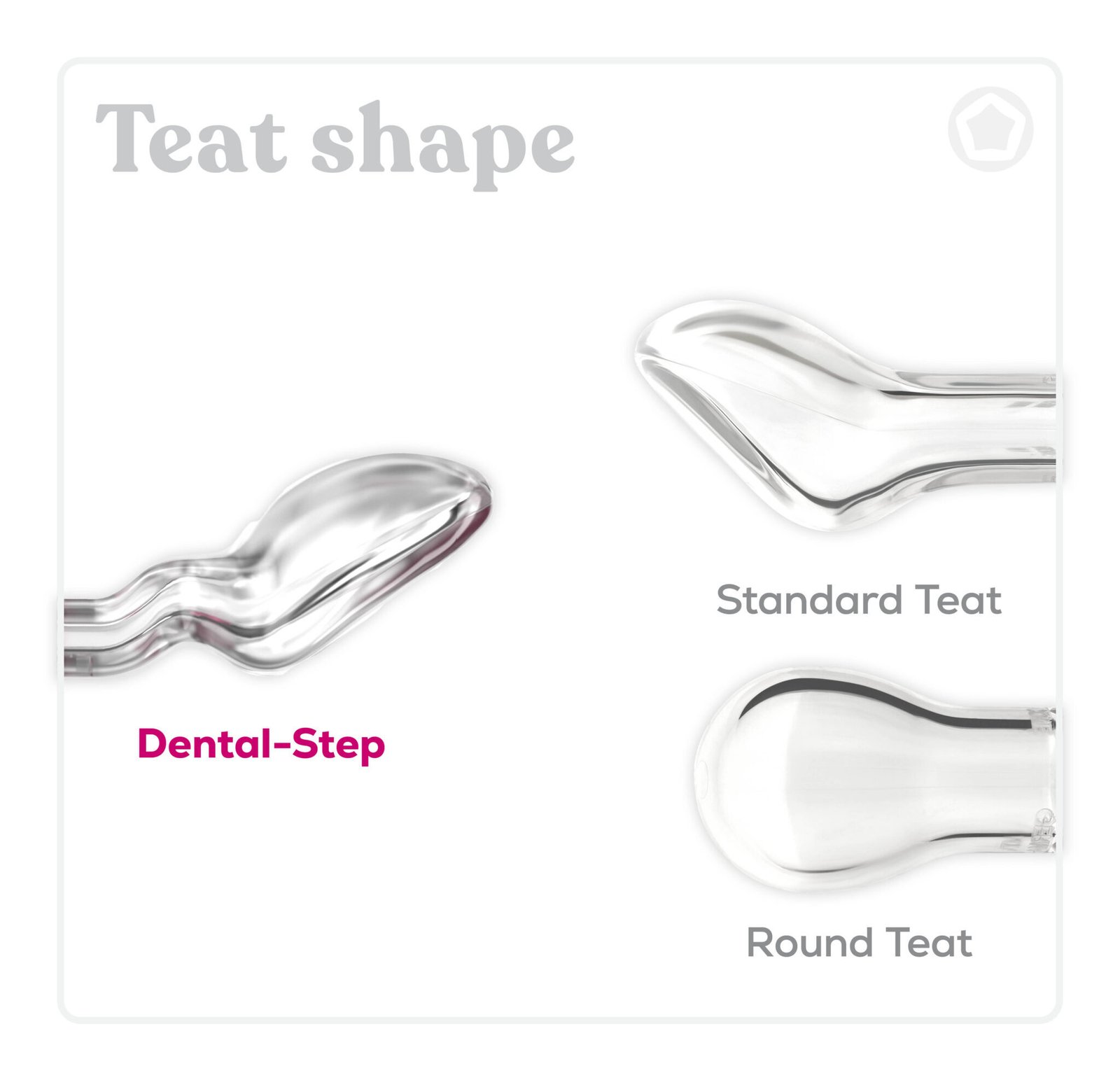
Many conventional soothers have a rounded shape and large teats that are not ideal for the natural movement of the tongue. Cherry teats and conventional soothers in particular, which are known as orthodontic soothers, push the teeth, jaw and tongue out of their natural position.
The dentistar pacifier sets new standards for healthy tooth development with its unique teat shape and Dental-Step.

Cherry soother

standard orthodontic
Dentistar Dental-Step
These teat shapes are critical for jaw development
Teats that are too large and thick ❌
are a particular problem for the development of a child’s jaw. They usually fill the mouth almost completely for hours. The tongue and teeth are displaced from their natural position –
malocclusions such as an open bite and speech disorders can be the result. Thick teat shaft A thick teat neck or shaft causes the teeth to be pushed apart and the lips cannot close completely.
This particularly favors the frontal open bite, in which the front teeth no longer lie on top of each other or overlap.
Teat too big ❌
A teat that is too large often fills the baby’s mouth almost completely. Especially round teats (cherry teats) with a round tip displace the tongue from its natural position. In addition, the child has to exert more pressure on the soother when sucking in order to move the teat in the mouth.
Heavy soothers ❌
The child must hold the soother with their mouth and lips. The heavier the soother is, the more force the child has to exert and cannot hold the jaw in its natural position.
This is what an orthodontic pacifier looks like
Tooth-friendly orthodontic soothers such as the dentistar soother minimize the impact on the teeth and tongue. In particular, the combination of the thin, narrow teat, angled teat part and the dental step lead to considerably less strain on the jaw.
Thin teat shaft ✅
The shaft of the pacifier should be as narrow and thin as possible. This keeps the distance between the teeth small.
Angled tip ✅
A teat that is angled flat at the top leaves more space for the tongue. The dentistar teat is also curved inwards – like a spoon – and thus creates even more space for the natural position of the tongue.
Dental-Step ✅
The Dental-Step allows the teeth to grow into their natural position. In normal dentition, the step is present in the jaw, with the upper teeth slightly protruding and the lower teeth slightly receding.
The Dental-Step in the dentistar pacifier therefore guides the teeth into their natural position right from the start. Low weight A tooth-friendly soother should weigh as little as possible.
The child must hold the soother with their mouth and lips. The lighter the soother is, the less force the child has to exert and can hold the jaw in its natural position.
This is why the Dental-Step is particularly tooth-friendly
A comparison with conventional soothers
Large teats push the tongue out of its natural position and can therefore restrict its function. The teeth are also displaced from their natural position, which can result in malocclusions such as an open bite.